Food Cost Optimization & Inventory Systems
Protect Margins Through Better Controls, Visibility, and Operational Discipline
Food costs are often one of the largest expenses within a hospitality operation.
Even small inefficiencies in purchasing, receiving, storage, production, or portion control
can significantly impact profitability over time.
Many operators know food costs are higher than they should be but struggle to identify
exactly where the losses are occurring.
Kitchen & Restaurant Solutions helps businesses improve operational visibility,
strengthen inventory controls, and create systems designed to support long-term profitability.
Food Cost Optimization & Inventory Systems
Protect Margins Through Better Controls, Visibility, and Operational Discipline
Food costs are often one of the largest expenses within a hospitality operation.
Even small inefficiencies in purchasing, receiving, storage, production, or portion control
can significantly impact profitability over time.
Many operators know food costs are higher than they should be but struggle to identify
exactly where the losses are occurring.
Kitchen & Restaurant Solutions helps businesses improve operational visibility,
strengthen inventory controls, and create systems designed to support long-term profitability.
Why Food Cost Management Matters
Food cost challenges are rarely caused by a single issue.
More often, profitability is affected by a series of small inefficiencies that develop across purchasing, production, inventory management, and daily kitchen operations. Individually, these issues may seem minor. Over time, however, their cumulative impact can significantly reduce margins.
Common examples include:
- Over-ordering
- Inconsistent portioning
- Excess waste
- Improper storage
- Inventory inaccuracies
- Vendor pricing issues
- Production inefficiencies
For many operators, the challenge is not a lack of effort. Teams are often working harder than ever while costs continue to rise and margins continue to shrink.
When food cost issues remain unaddressed, profitability suffers, operational pressure increases, and opportunities for growth become more difficult to achieve.
The objective is not simply to reduce costs. The objective is to create systems, controls, and accountability that support long-term financial performance.
Rising Costs Have Changed the Operating Environment
Over the past several years, hospitality operators have faced unprecedented pressure from rising food costs, supply chain disruptions, labor challenges, and changing market conditions.
Many businesses that once maintained healthy margins now find themselves working harder to achieve the same financial results.
As costs continue to fluctuate, even well-managed operations can experience profitability challenges when purchasing practices, inventory controls, production systems, or operational visibility begin to weaken.
For many operators, the issue is not a lack of effort. Teams are often working harder than ever while margins continue to shrink.
In today’s environment, protecting profitability requires more than simply increasing sales. It requires clear visibility into costs, disciplined operational controls, and systems that support consistent execution.
The good news is that meaningful improvements are often found not through dramatic changes, but through stronger accountability, better decision-making, and practical operational systems that help protect margins over the long term.
Common Challenges
Many operators know costs are rising but struggle to identify exactly where margins are being lost.
Common challenges often include:
- Rising food costs
- Inventory discrepancies
- Excessive spoilage
- Waste concerns
- Inconsistent portion sizes
- Purchasing inefficiencies
- Difficulty tracking inventory
- Lack of food cost visibility
- Vendor management concerns
Consulting May Include
Food cost challenges rarely originate from a single source.
More often, profitability is affected by multiple operational factors working together, including purchasing practices, inventory controls, production systems, portion management, waste, and accountability.
A structured operational review helps identify where costs are being lost and where opportunities exist to improve visibility, strengthen controls, and protect margins.
Depending upon the needs of the operation, consulting services may include:
• Inventory system evaluation
• Purchasing process review
• Product utilization analysis
• Waste reduction strategies
• Portion control systems
• Receiving procedures
• Vendor evaluation
• Production planning
• Food cost awareness training
• Cost-control implementation support
Areas Commonly Reviewed
Inventory Controls
- Inventory procedures
- Count accuracy
- Product tracking
- Storage systems
Purchasing Practices
- Vendor relationships
- Purchasing consistency
- Product specifications
- Cost monitoring
Production Management
- Forecasting
- Prep planning
- Product utilization
- Waste reduction
Team Execution
- Portion consistency
- Accountability systems
- Training effectiveness
- Operational compliance
Potential Outcomes
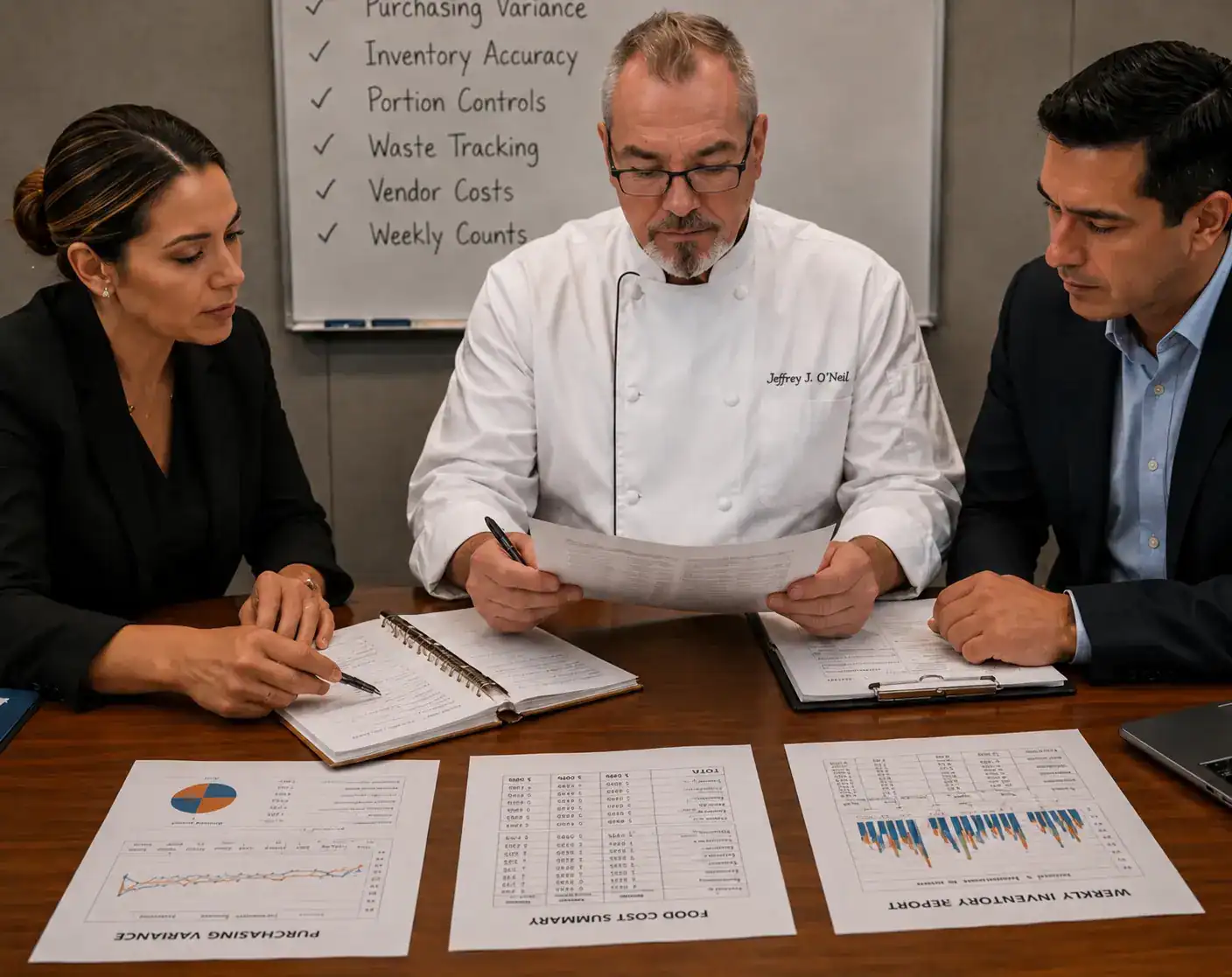
Even small improvements in inventory management, purchasing practices, product utilization, and operational consistency can create meaningful financial impact over time.
The goal is not simply to reduce costs, but to strengthen the systems that support long-term profitability.
Clients frequently experience outcomes such as:
- Improved food cost visibility
- Reduced waste
- Better inventory accuracy
- Improved purchasing discipline
- Stronger cost awareness
- Increased profitability
- Better forecasting
- More efficient operations
Who This Service Is Best For
Working harder does not always improve profitability. Strong margins are built through visibility, accountability, and operational discipline.
This service is designed for operators who want to strengthen the systems that directly impact food cost performance.
- Restaurants experiencing rising food costs
- Hospitality groups
- Catering operations
- Commercial kitchens
- Institutional food service
- Operators seeking margin improvement
Protect Your Margins. Strengthen Your Systems.
Many food cost challenges develop gradually over time, making them difficult to identify from within the operation.
An experienced outside perspective can often uncover opportunities to improve visibility,
strengthen controls, and support healthier margins.
Schedule a consultation to discuss your operation and identify practical strategies for stronger food cost performance.
Request a Consultation Below